Korean Pancakes (Pajeon): An Incredible 7-Step Recipe
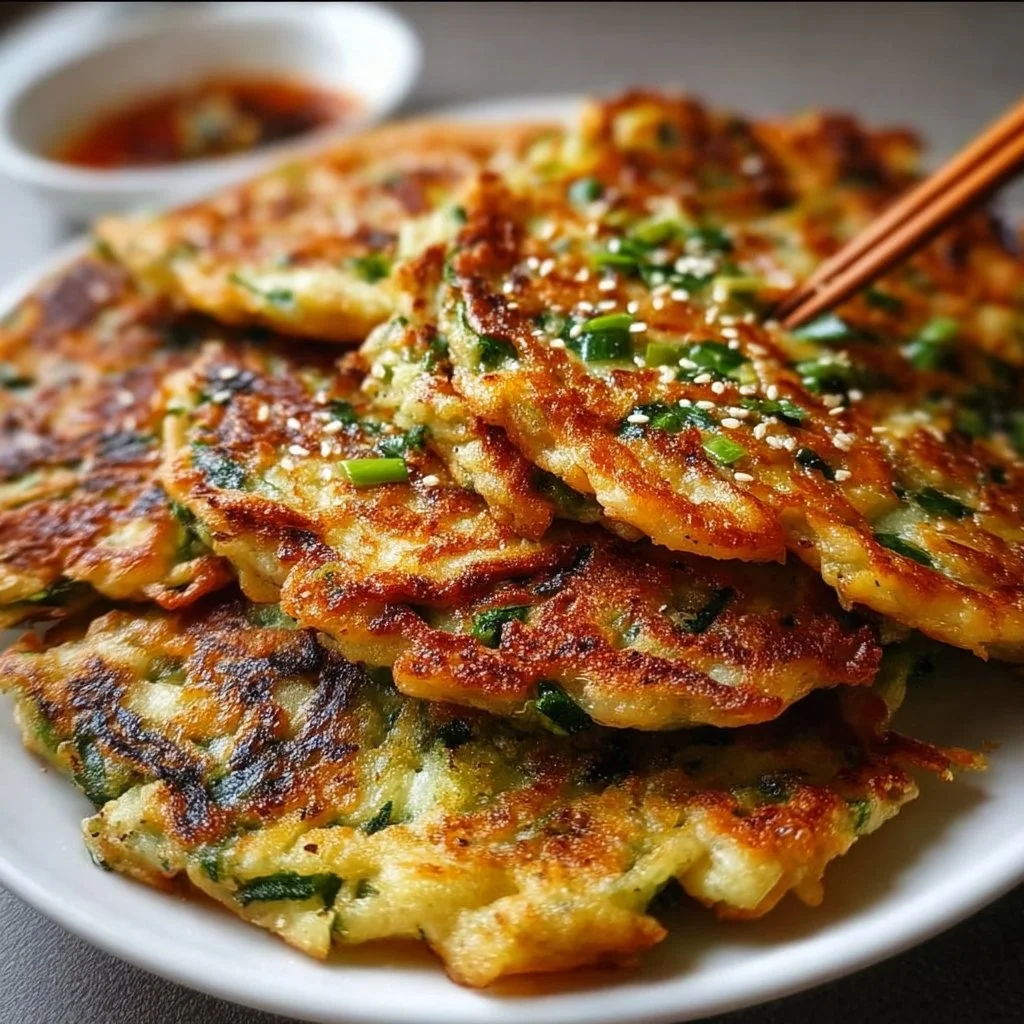
While we have provided a jump to recipe button, please note that if you scroll straight to the recipe card, you may miss helpful details about ingredients, step-by-step tips, answers to common questions and a lot more informations that can help your recipe turn out even better.
I believe every good meal starts with chaos and a pan that looks like it has trust issues. Also: pancakes should not be boring, even if they’re green and pretending to be vegetables.
If you’ve ever thought a savory pancake could fix Tuesday’s emotional weather, you’re probably the kind of person who bookmarked a fluffy pancake muffin recipe at 2 a.m. and swore you’d change your life by breakfast. No judgment. (Mostly.)
How I ruined my kitchen and my reputation
There was that one night—mid-pandemic, naturally—when I decided to try pajeon and thought: “How hard can batter be?” Answer: harder than doing taxes and assembling IKEA furniture at the same time. The first attempt smelled like damp cardboard and a busker’s regrets (yes, a busker), the texture was that deflated sponge-y sadness you remember from college, and the sound as it hit the pan was a panicked sizzle that sounded like applause for a trap door opening. I flipped it like I was closing a book on a bad relationship and it folded in half like it had better places to be.
Embarrassing? Very. Specific? Also yes — I can still hear it. I cried. I ate it anyway because I was not wasting food and also because that’s how I cope (carbs + denial). This story wanders because I am a messy person and life taught me to embrace the mess, but also to feed the mess.
Why this slightly neurotic version actually works
I learned two things: 1) texture is more emotional than philosophy, and 2) less is more unless we’re talking scallions. So this version fixes the sponge problem by balancing liquid and flour like a slightly unhinged scientist who cares about mouthfeel. I stopped overmixing (counterintuitive; I miss stirring aggressively like a plot twist), respected hot oil but not too hot, and accepted that crisp edges forgive a lot.
Also, I became emotionally braver: I stopped treating the recipe as a ritual and more like a conversation. That’s when the Korean Pancakes (Pajeon) stopped being sad and started being reliably joyful. Slight doubt remains (I will always question my life choices at the flip), but the results say I’m onto something.
What’s in the batter (and why you’ll love it)
- 1 cup all-purpose flour
- 1 cup water
- 1 large egg
- 1 bunch green onions (scallions), chopped
- 1 small carrot, julienned
- 1 small zucchini, julienned
- ½ teaspoon salt
- ½ teaspoon black pepper
- Vegetable oil (for frying)
If you hate eggs (no judgment!), you can riff on this and try a substitution—there’s a decent no-egg pancake option that gives good vibes and holds batter in a pinch. Budget, texture, availability — pick your battles. Also — buy the scallions like your life depends on them. They will change you.
Cooking Unit Converter
If you’re converting cups to a unit that makes you feel like a chef (or a math whiz), use this handy tool:
How to make them without losing your mind
- Mastering Korean Pancakes (Pajeon) is straightforward when following these clear instructions
- Whisk flour, water, egg, salt, and pepper until mostly smooth; little lumps are fine (don’t go cry-into-the-bowl over it)
- Fold in scallions, carrot, and zucchini so everything looks like it’s on the same team
- Heat a nonstick skillet with a thin film of oil over medium-high — you want hiss, not inferno
- Pour batter, spread to a rough circle, press down with a spatula; crisp edges are the goal (be assertive)
- Cook 2–3 minutes, flip (yes, flip it — it will intimidate you but you will survive) and cook until golden on the other side
- Drain briefly on paper towels, eat while steam is still telling tiny secrets to your face
Non-linear thoughts: sometimes I press the pancake and it recoils (like a cat), sometimes it behaves; if it’s soggy, your pan wasn’t hot enough or you added sympathy (I mean water). TIP: don’t overcrowd the pan. OVERCROWDING = SADNESS. Also: save some scallions for garnish. NEVER not garnish.
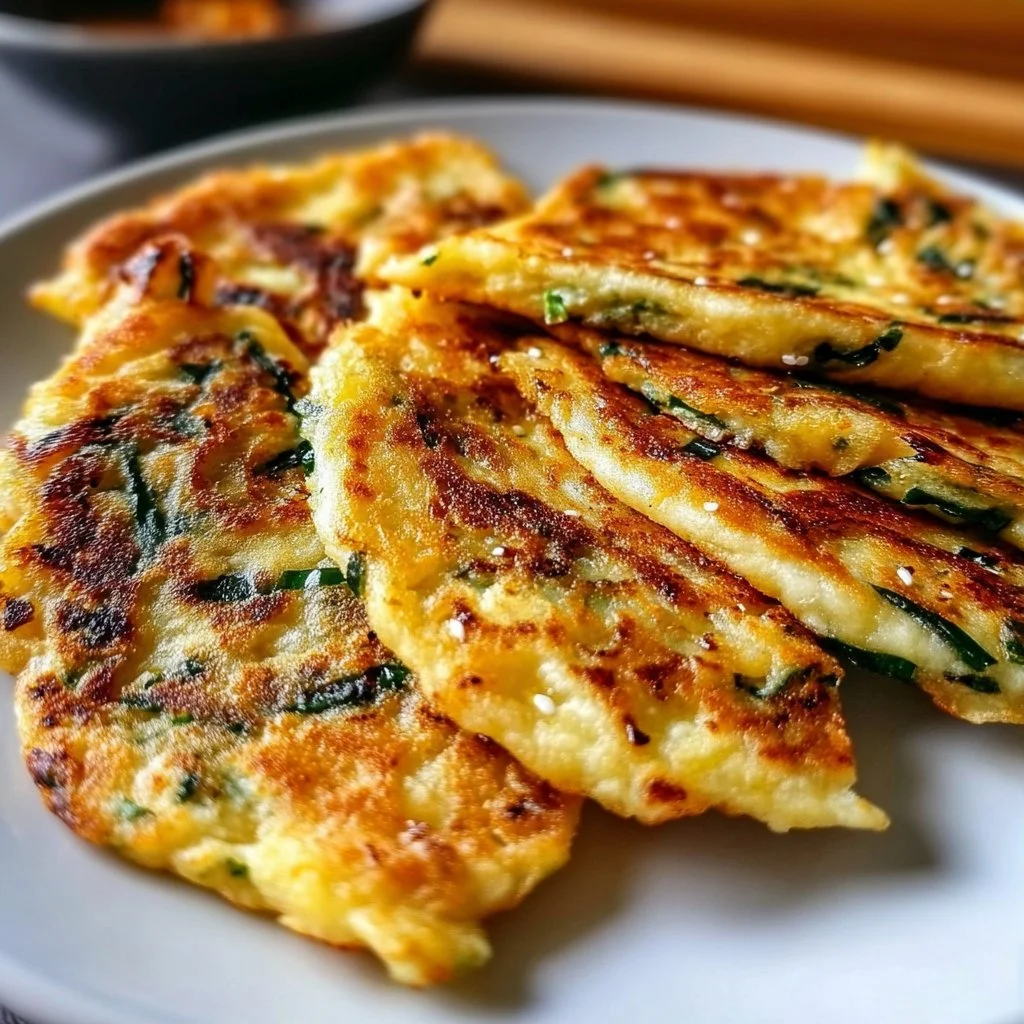
Okay, real talk — are you eating this alone or with people who’ll judge you?
Do you have a kid who thinks green means evil? Do you have a partner who applauds everything? Do you, like me, sometimes feed dinner to the neighbor because you need validation? Tell me. Are you the person who microwaves leftovers into a single serve life crisis? If you’re reading this in your pajamas, hi. Also, if you love quick wins and chaotic breakfasts, consider how this sits next to something like my pancake recipe — fluffy & easy on a Sunday that’s pretending to be productive. What’s your topping? Soy? Chili? Ranch? (Don’t answer that too loudly.)
Yes-ish. You can mix it an hour ahead and keep it in the fridge, but it’s happiest freshly mixed. If it separates, stir gently — no full reinvention required.
Probably the pan was too cool or the batter too wet. Crank up the heat slightly and remember thin is crisp-friendly. Also—patience.
Absolutely. Shrimp or kimchi are popular, though I, personally, once threw in random deli cheese and will not speak of it again. Mix-ins change cooking time, so adjust.
Yes! Use a no-egg binder like a flax or store-bought replacer and keep the veggies heavy. Texture will shift but flavor stays awesome.
Dipped in soy-sesame sauce, eaten with chopsticks, inhaled while standing in the kitchen — all valid. Pair with something acidic to cut richness.
I keep thinking about how food can be therapy but cheaper, and also louder (because frying makes a soundtrack). This pancake is not a fix-all but it’s a small ritual: chop, mix, sizzle, eat. Sometimes the best decisions are the ones made with a spatula in hand, especially when you’re only halfway listening to a podcast and entirely certain you forgot your keys, though maybe you didn’t, because they were in the fridge (I did that once). And now I need to check the oven because—was something in there?
Korean Pancakes (Pajeon)
Ingredients
For the batter
- 1 cup all-purpose flour
- 1 cup water
- 1 large egg Can be substituted for a no-egg option
- ½ teaspoon salt
- ½ teaspoon black pepper
Vegetables
- 1 bunch green onions (scallions), chopped Essential for flavor
- 1 small carrot, julienned
- 1 small zucchini, julienned
For frying
- as needed vegetable oil For frying, enough to coat the skillet
Instructions
Preparation
- Whisk together the flour, water, egg, salt, and black pepper until mostly smooth; little lumps are fine.
- Fold in the chopped scallions, julienned carrot, and zucchini until well combined.
Cooking
- Heat a nonstick skillet with a thin film of oil over medium-high heat.
- Pour a portion of the batter into the skillet, spread it to form a rough circle, and press down with a spatula.
- Cook for 2–3 minutes or until the edges are crispy, then flip and cook until golden brown on the other side.
- Drain on paper towels and serve warm.