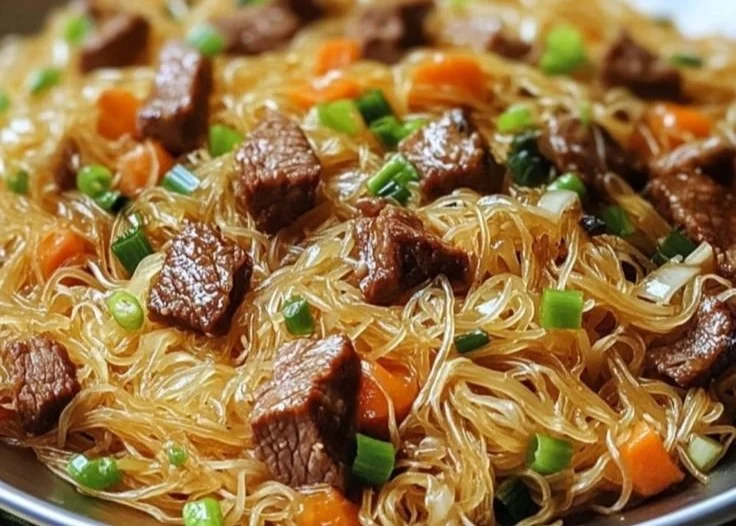
Filipino Pancit with Beef

While we have provided a jump to recipe button, please note that if you scroll straight to the recipe card, you may miss helpful details about ingredients, step-by-step tips, answers to common questions and a lot more informations that can help your recipe turn out even better.
I believe weeknight dinners should be loud, weirdly nostalgic, and forgiving — which is why I insisted for years that Filipino Pancit with Beef be a dramatic, teary, family-centerpiece thing. Spoiler: it’s a comforting, kind-of-messy noodle hug and also it will eat your stovetop if you’re not paying attention (true story, later). If you like noodle dinners that double as leftovers, you might also love this vegetable beef soup with cabbage — it’s proof that cabbage and beef are secretly best friends.
How I set the kitchen on “sad, smoky” mode
I have a vivid memory of burning noodles. Like, not even a graceful blackened edge — actual small, crunchy rice-paper shards that smelled like regret and matchsticks. The first time I tried (and failed) at pancit I under-soaked the rice vermicelli and then, in my infinite wisdom, decided the highest heat is always better. There was a lot of sizzling and an alarmed cat. The beef turned into rubber. The onions went translucent then into an existential crisis. Also, garlic — when you scorch it, it gives you a smell that follows you to your neighbor’s mailbox. Embarrassing? Yes. Educational? Also yes, but education came with a smoke detector chorus and my neighborhood group chat trashing my culinary choices.
I still think about the texture sometimes (do noodles have feelings?). The sound of wet noodles hitting a hot pan is one of those culinary things that haunts me in the best way.
Why this slightly neurotic version finally behaves
What changed: patience, water, tiny ego adjustments. I stopped trying to impress myself with searing heat and started thinking more like a calm soup — liquid as ballast. That one mindset (and actually soaking the rice noodles properly) made what I now call Filipino Pancit with Beef stop being a high-stakes audition and start being a reliable friend.
Also I let the beef rest a beat before I tossed everything together (not a lot, just enough to not overwork it), and I learned to treat soy and chicken stock as the support actors: not the star, but you notice when they aren’t there. Emotionally? I allowed myself to serve slightly imperfect texture. Practically? I measured, I tasted, I didn’t panic — most of the time. Confidence? Mostly. Lingering doubt? Always. That’s fame or adulthood or both.
You’ll need this stuff (and a few thoughts about it)
- 1 package (8.8 ounces) Thai Vermicelli rice noodles.
- 2 tablespoons canola oil.
- 1 pound beef, sliced into bite-sized pieces.
- 1 yellow onion, diced.
- 6 cloves garlic, minced.
- 2 tablespoons soy sauce.
- 1 cup chicken stock.
- 2 cups shredded cabbage.
- 1/2 cup sliced carrots.
- 3 green onions, diced.
- Kosher salt and cracked pepper, to taste.
Budget, texture swaps, availability: rice vermicelli is cheap, cooks fast, and if you’re in a pinch you can use wider rice noodles (different vibe but still delicious). Cabbage gives the dish that crunchy-then-soft thing I love; if you’re feeling extravagant, more green onions. Or don’t. I am flexible sometimes.
Cooking Unit Converter
If you’re eyeballing cups and tablespoons and want to convert to grams or ounces, this little tool will save your evening.
How to not ruin it this time (but also: go wild)
- Soak the rice noodles according to the package directions.
- Slice the beef into bite-sized pieces and dice the vegetables.
- Heat the canola oil in a wok or large sauté pan over medium-high heat.
- Add the beef, diced yellow onion, minced garlic, and soy sauce to the pan. Cook for 3-5 minutes until the beef is browned. Season with salt and pepper to taste.
- Pour in the chicken stock, then add the shredded cabbage, sliced carrots, and diced green onions. Cook for another 3-5 minutes until the vegetables have softened.
- Add the soaked noodles to the beef and vegetable mixture. Toss everything together to combine well. Adjust the seasoning with more salt and pepper if needed.
- Serve the pancit hot and enjoy!.
Also: don’t over-soak the noodles (they should be pliable, not mush). If your pan is too small, the whole thing turns into a clumpy sadness — use a big pan. Toss gently; you’re folding feelings into the noodles. TASTE as you go (imagine I’m reminding you, loudly). Pro tip: if the noodles seem dry, a splash more chicken stock saves lives — and dinner.
Okay but real talk: what are we doing on a Tuesday?
Do you microwave a slice of lemon before squeezing it? No? Me neither — until I did and now I judge my past self. Do you have that one friend who always brings a giant tub of store-bought noodles to gatherings and acts like it’s artisanal? We all do. Also, legitimately: have you tried making this with leftover roast beef? It’s like the favorite corned beef hash recipe of noodles — similar energy, different appliance needs. Tell me your noodle sins. I will shame you affectionately.
Yes. Chicken works great (similar timing if cut small), tofu is softer and needs gentle handling — press it first if you want texture. Personally, I like beef for its savory richness but I’m not a purist.
Yes, or they’ll be chewy and sad. Follow package directions; think of it like a spa for noodles. Too long and they’re mush, too short and they snap. Balance is everything.
In the fridge, 3-4 days. Noodles absorb sauce overnight (so leftovers are denser), and some people actually prefer that. Reheat gently with a splash of stock or water.
Swap regular soy sauce for tamari or a gluten-free soy alternative and double-check your chicken stock. The dish plays nicely with substitutions, promise.
Both camps exist. I fall on the slightly saucy side so the noodles glisten and don’t clump — but if you like dry and noodle-forward, reduce the stock a touch. Personal preference wins.
I still feel weirdly sentimental about boiling water. Is that stupid? Maybe. But when those rice noodles hit the hot broth and everything smells like garlic and soy and childhood lunches, I get emotional. Also distracted by grocery lists (do I have scallions?) and someone on my phone asking what time dinner is, and then I forget the small thing I was going to say and—
Daily Calorie Needs Calculator
If you want to estimate calories per serving or adjust portions, this calculator is a painless way to do it.
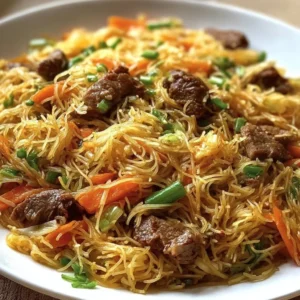
Filipino Pancit with Beef
Ingredients
Main Ingredients
- 1 package 8.8 ounces Thai Vermicelli rice noodles Soak according to package directions.
- 2 tablespoons canola oil For cooking.
- 1 pound beef, sliced into bite-sized pieces Any cut suitable for quick cooking.
- 1 yellow onion, diced
- 6 cloves garlic, minced
- 2 tablespoons soy sauce
- 1 cup chicken stock
- 2 cups shredded cabbage Provides crunch and texture.
- 1/2 cup sliced carrots For sweetness and color.
- 3 pieces green onions, diced For garnish and flavor.
- Kosher salt and cracked pepper, to taste For seasoning.
Instructions
Preparation
- Soak the rice noodles according to the package directions.
- Slice the beef into bite-sized pieces and dice the vegetables.
Cooking
- Heat the canola oil in a wok or large sauté pan over medium-high heat.
- Add the beef, diced yellow onion, minced garlic, and soy sauce to the pan. Cook for 3-5 minutes until the beef is browned. Season with salt and pepper to taste.
- Pour in the chicken stock, then add the shredded cabbage, sliced carrots, and diced green onions. Cook for another 3-5 minutes until the vegetables have softened.
- Add the soaked noodles to the beef and vegetable mixture. Toss everything together to combine well. Adjust the seasoning with more salt and pepper if needed.
- Serve the pancit hot and enjoy!