
How to Make the Perfect Cheesecake Factory Brown Bread at Home

While we have provided a jump to recipe button, please note that if you scroll straight to the recipe card, you may miss helpful details about ingredients, step-by-step tips, answers to common questions and a lot more informations that can help your recipe turn out even better.
I believe bread has feelings. Also that the Cheesecake Factory Brown Bread is inexplicably nostalgic, like a sitcom laugh track for my mouth. Bold? Sure. But there is something soft and guilty about that dense, slightly sweet loaf that makes you act like you didn’t just eat half of it with nothing but butter. (Also: I tried to make this exact loaf during the pandemic and nearly set off my smoke alarm. Romantic, no.)
I started this whole thing because someone in my family — possibly me — declared that everything tastes better if it looks like it came from a restaurant. So I tried to imitate that brown bread. It went poorly. Then better. Now it’s… a thing. If you want a version that behaves like store-bought but actually cares about you, keep reading, or just stare at this paragraph and decide later. Also, here’s a silly riff I made once while procrastinating: a banana bread brownies twist that you will judge and then love.
How to make delicious brown bread at home
I have failed at this bread in very specific and theatrical ways. Like, once the crust smelled like a campfire gone rogue (not the artisanal kind). Another time the interior was so gummy it could’ve been used as a stress ball. The first rise sounded like nothing. The second rise sounded like betrayal.
I baked loaves that collapsed mid-pride — yes, I patted them like they were puppies and then they folded. I learned to stop listening to my neighbor who swore by "more flour" for solidity (no offense, Karen). The embarrassment was real: friends arriving with casseroles and me presenting half a loaf that we all pretended was fine. It was not fine. My kitchen smelled like cocoa and regret. But also like hope? I don’t know. It wandered. Like me.
Also, once I tried adding raisins because raisins are obviously the problem-solver for everything. They were not.
Rewrite this heading
Why this version finally behaves: small changes, emotional growth. I stopped treating yeast like a mystery cult and started treating it like a roommate who needs the right temp and a little cheering on. Practically, I got precise about water temperature (warm — not aggressive), and I stopped over-flouring out of fear. Emotionally, I stopped being dramatic about rises. Less panic. More patience. Mostly.
This Cheesecake Factory Brown Bread clone tightened up because I embraced whole wheat — just enough to make it interesting — and tempered my expectations. Also, molasses. It was the missing voice in the chorus. The bread learned to speak up without shouting. Confidence? Yes. Lingering doubt? Always. Sometimes I glance at a perfectly glossy loaf online and rethink my life choices. But then I slice it and no regrets.
Also, because I am incapable of leaving well enough alone, I once tried mixing in a tiny amount of coffee for depth. It was subtle and ridiculous and also kind of brilliant. If you’re adventurous, my other experiments live over here and they are chaotic but edible: my banana bread brownies experiments (you asked for extra chaos).
Rewrite this heading
- 1 cup warm water
- 2 tablespoons brown sugar
- 1 packet active dry yeast
- 1/4 cup melted butter
- 1 cup whole wheat flour
- 1 1/2 cups all-purpose flour
- 1/4 cup cocoa powder
- 1 teaspoon salt
- 1 teaspoon molasses
- 1/4 cup oats
budget, texture, availability (sometimes I swap the oats for seeds because I’m thrifty and emotionally complicated — also, if you can’t find whole wheat, try half oat flour; it’s not the same but it will talk to you).
Cooking Unit Converter
If you like numbers converted into things that make sense, this little tool will help you when you decide to double or halve the recipe.
Rewrite this heading
- In a bowl, combine warm water and brown sugar; sprinkle yeast on top and let it sit for 5-10 minutes until foamy.
- Mix in melted butter and molasses.
- In a separate bowl, whisk together whole wheat flour, all-purpose flour, cocoa powder, and salt.
- Gradually add the dry ingredients to the yeast mixture, stirring until a dough forms.
- Knead the dough for about 5-7 minutes until smooth.
- Place in a greased bowl, cover, and let it rise in a warm place until doubled in size, about 1 hour.
- Preheat oven to 350°F (175°C).
- Punch down the dough and shape it into loaves or rolls.
- Place on a greased baking pan and let rise for another 30 minutes.
- Bake for 25-30 minutes until golden brown.
- Let cool before serving.
Yes, that’s linear and boring, but also true. Interruptions: if your dough feels clingy, resist adding flour like it’s therapy. Let it rest. TIP: warmth is your friend — not too hot, not judgmental. Also, sometimes I egg-wash the top because I am dramatic and the bread likes the attention. Occasionally I forget to time things. Life.
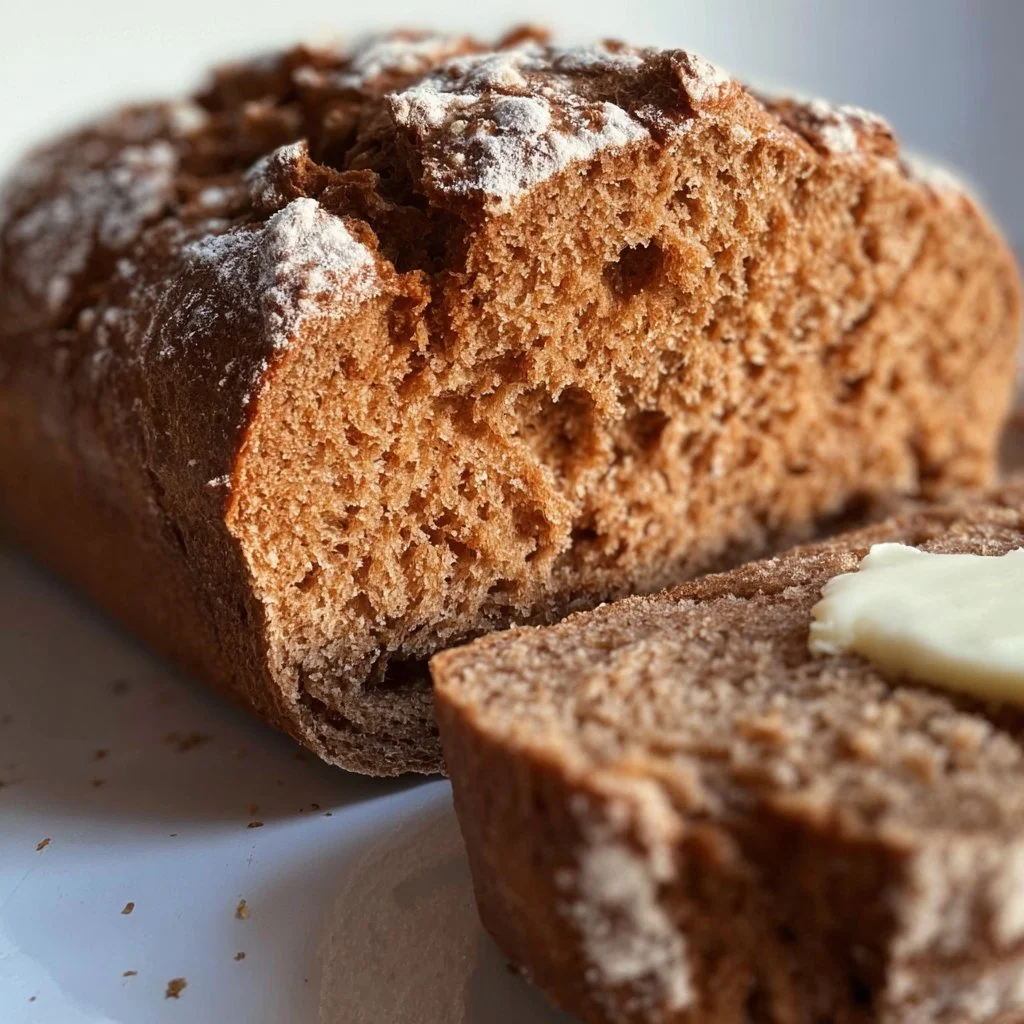
Rewrite this heading
Do you also talk to your loaves? No? Okay, then maybe it’s just me. Who else has stood over a rising bowl whispering encouragement like a weird pastry therapist? Who has hidden loaves from roommates because sharing is for people with fewer feelings? Tell me your disaster stories. Were you raising kids or raising dough? Did your in-laws approve or plot an intervention? I assume we all overbake when stressed and under-knead when distracted. Am I right? (I am.)
Rewrite this heading
Probably underproofed or too much flour. Let it rise properly and be brave with your kneading. Also consider water temp; yeast is picky.
Yes, but you’ll lose that gently nutty flavor. Swap for all-purpose if that’s what you have. It won’t be the same, but it will be bread and bread is love.
A couple days wrapped at room temp, or freeze for longer. I once ate a slice cold from the freezer at 2 a.m. and felt seen.
Absolutely. Add them during kneading. But don’t overdo it — we are making sneakily soft bread, not a trail mix.
It gives that brown-ness and depth. You can reduce for a milder loaf, but it helps. Don’t worry, it’s not chocolate cake.
I will stop pretending I don’t get emotionally attached to a loaf. I will keep trying things, fail spectacularly, learn a tiny thing, succeed embarrassingly, and then post about it. This bread is a mirror — dense, slightly sweet, forgiving — and I am… well, interrupted by the oven timer again and I think someone texted me about brunch plans so, also, who am I kidding, I’m making another loaf.
Daily Calorie Needs Calculator
If you care about numbers and consequences, this calculator helps you balance indulgence and reality.
Brown Bread
Ingredients
Dough Ingredients
- 1 cup warm water Temperature should be warm, not aggressive.
- 2 tablespoons brown sugar
- 1 packet active dry yeast
- 1/4 cup melted butter
- 1 cup whole wheat flour Can substitute with half oat flour if whole wheat is unavailable.
- 1 1/2 cups all-purpose flour
- 1/4 cup cocoa powder Provides depth and color.
- 1 teaspoon salt
- 1 teaspoon molasses Essential for flavor.
- 1/4 cup oats Can be substituted with seeds.
Instructions
Dough Preparation
- In a bowl, combine warm water and brown sugar; sprinkle yeast on top and let it sit for 5-10 minutes until foamy.
- Mix in melted butter and molasses.
- In a separate bowl, whisk together whole wheat flour, all-purpose flour, cocoa powder, and salt.
- Gradually add the dry ingredients to the yeast mixture, stirring until a dough forms.
- Knead the dough for about 5-7 minutes until smooth.
- Place in a greased bowl, cover, and let it rise in a warm place until doubled in size, about 1 hour.
Baking
- Preheat oven to 350°F (175°C).
- Punch down the dough and shape it into loaves or rolls.
- Place on a greased baking pan and let rise for another 30 minutes.
- Bake for 25-30 minutes until golden brown.
- Let cool before serving.